Tina Schröder · 27 October 2026
How Moon-Driven Water Movements Shape Search Trends Among Shoreline Hospitality Operators in Estuary Zones
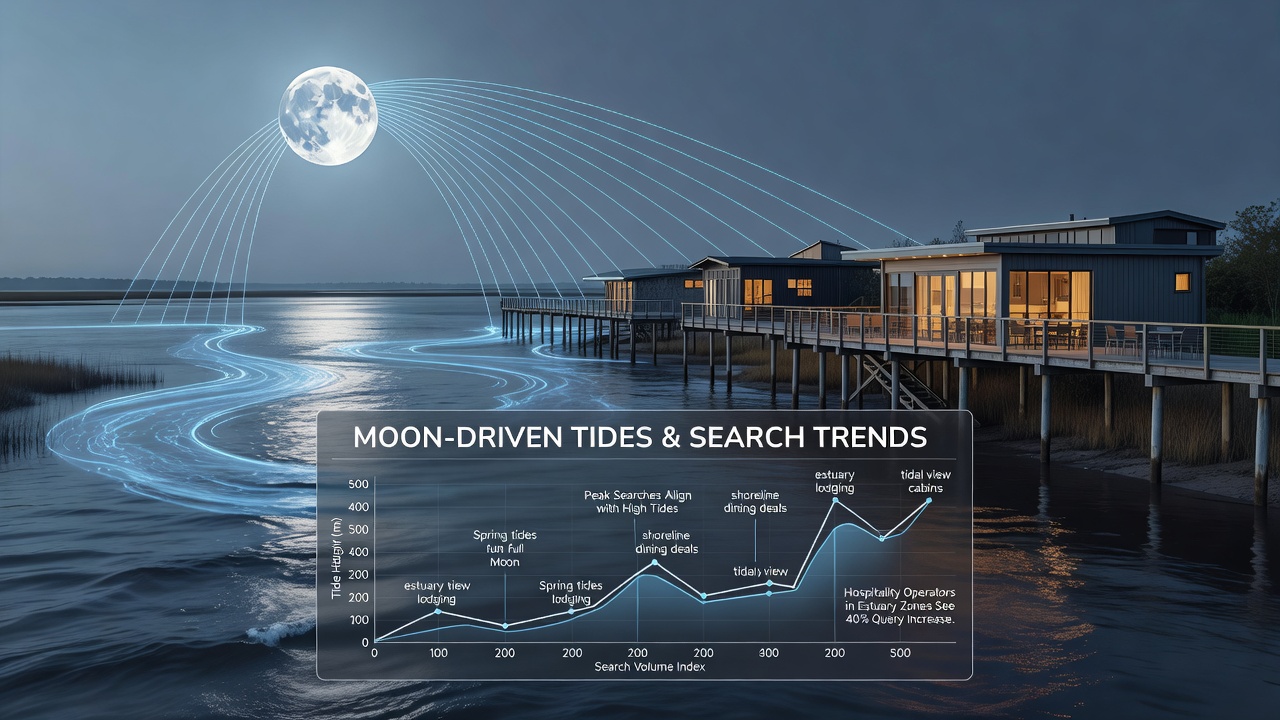
Gravitational forces from the moon generate predictable cycles of water level changes that extend into estuary systems where rivers meet the sea, and these movements correlate with measurable shifts in online queries for lodging and related services along affected shorelines. Observers note that operators in these transitional zones track lunar calendars because peak tidal ranges often align with increased searches for accommodations that offer direct access to changing water conditions. Data from environmental monitoring programs shows that spring tides, which occur when the moon aligns with the sun, produce higher water volumes that reshape beach profiles and navigation routes in estuaries, prompting visitors to research properties equipped for those conditions.
Lunar Gravity and Resulting Tidal Cycles in Coastal Estuaries
The moon completes its orbit around Earth roughly every 27.3 days, and its gravitational pull creates two bulges in ocean waters that move as Earth rotates, generating the daily ebb and flow observed in estuary zones. Researchers at institutions such as the Australian Institute of Marine Science have documented how these cycles intensify in funnel-shaped estuaries, where incoming tidal waters compress and raise water levels more dramatically than on open coasts. Spring tides reach their maximum range during new and full moons while neap tides produce smaller fluctuations at quarter moons, patterns that hospitality operators monitor because they influence guest activities like kayaking, fishing, and shoreline walks available at different times of the month.
Estuary operators report that bookings for properties near mudflats or tidal channels see noticeable upticks when neap tides create stable water levels suitable for extended low-impact recreation. According to records maintained by the National Oceanic and Atmospheric Administration, lunar phase data combined with estuary-specific bathymetry allows operators to anticipate periods when water movements expose or submerge key recreational areas, directly feeding into the timing of targeted search campaigns for those dates.
Estuary-Specific Water Dynamics and Visitor Behavior Patterns
Freshwater outflows mix with tidal saltwater in estuary zones, creating variable salinity gradients and sediment transport that change daily under lunar influence, and these physical alterations affect the visual appeal and accessibility of shoreline hospitality sites. Studies from Canadian research vessels operating in the St. Lawrence estuary have recorded how stronger lunar-driven inflows during spring tides redistribute sandbars and alter wildlife sightings, factors that travelers often research before selecting accommodations. Search volume data aggregated by tourism analytics platforms reveals correlations between these tidal events and queries for estuary lodges that advertise birdwatching decks or boat launches positioned for optimal water levels.
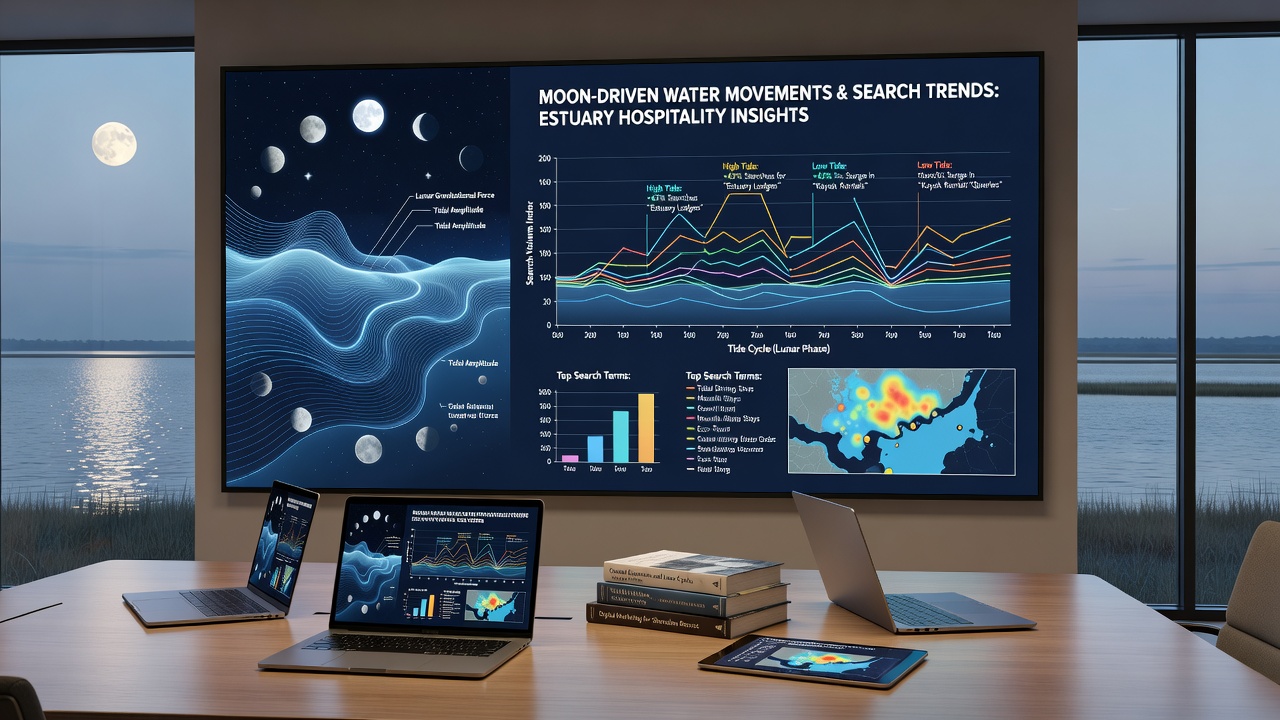
Operators along the Pacific Northwest estuaries have observed that searches for pet-friendly shoreline cabins increase when lunar cycles produce moderate tides that keep certain trails above water during daylight hours. Figures compiled by the European Environment Agency indicate that estuary tourism in regions such as the Wadden Sea experiences similar search pattern adjustments tied to tidal amplitude, with visitors seeking properties that provide real-time tide information alongside reservation options. Those patterns hold across multiple lunar months, demonstrating consistent linkages between water movement forecasts and digital interest in specific hospitality assets.
Search Trend Correlations and Operational Adjustments
Analytics from regional tourism boards show that queries containing terms such as estuary lodging, tidal waterfront stays, and shoreline access rooms rise measurably in the days preceding maximum tidal ranges, giving operators lead time to adjust availability displays and promotional copy. One analysis covering multiple estuary systems found that search interest for guided paddling experiences peaks during neap tide windows when currents remain manageable, while spring tide periods drive queries focused on elevated viewing platforms and storm surge preparedness features. Hospitality platforms serving these zones integrate lunar calendars into their content calendars so that metadata and landing pages reflect the water conditions expected during upcoming guest stays.
In October 2026, projected alignments of lunar apogee with spring tides are expected to produce extended high-water periods across several North American and European estuaries, a development already reflected in forward-looking search data collected by destination marketing organizations. Operators use these forecasts to time the release of updated property photos showing altered shoreline configurations and to refine keyword sets that match the specific activities guests research under those tidal regimes.
Conclusion
Long-term records confirm that moon-driven water movements create recurring conditions in estuary zones that hospitality operators translate into search optimization strategies, with measurable impacts on query timing and content focus. Continued monitoring of both lunar cycles and associated digital trends allows shoreline properties to align their online presence with predictable visitor interests generated by these natural rhythms.